Showing posts with label Humbug. Show all posts

Saturday, October 31, 2015

Second Edition of Humbug! Price drop - only $2

The Second (eBook) Edition of Humbug! is now US$2 from:
Essentially it's as cheap as I can make it through Amazon without enrolling it in Kindle Direct Publishing Select, which you can only do if the book is exclusively on Amazon (which I'd never be prepared to do).


Sunday, November 04, 2012

False Compromise

Other Terms and/or Related Concepts

Splitting the difference.


Description

The advocate asserts that because they do not understand or accept the opponent’s views, in fairness the two should agree to "split the difference" and arrive at a middle position. Such an approach to addressing an issue is more about mollifying the parties to a disagreement, rather than arriving at the truth of the matter.

Example

Jason Typeface and Wolfgang Von Volkswagen are senior bureaucrats in the Department of Justice. They have been engaged in a protracted discussion on the wording of a sentence in their jointly authored report on police "stop, question and search" powers. Jason has come to believe that police effectiveness in drug law enforcement is dependent on an absolute power to stop, question and search at their own discretion. Wolfgang believes that any questioning or search of suspects should only take place in the presence of legal representatives. They agree to split the difference and the final sentence reads: "Police may stop and search suspects at their own discretion, but any evidence so obtained cannot be used to prosecute the suspect.”

Comment

It is a safe assumption that neither Wolfgang nor Jason is satisfied with the compromise wording of the sentence. Neither of them actually believes that the stop, question and search policy they have come up with is the best one. Yet the reader of their report might make the assumption that the view expressed is what the authors believe to be the best policy. To avoid this misperception, Wolfgang and Jason should make it clear in the wording of their report that their conclusion is a compromise rather than a consensus view of the best position. Their compromise then would be open, rather than concealed.

There is a more intellectually respectable alternative to an open compromise. Wolfgang and Jason could be quite explicit about their disagreement and make it clear that they came to different conclusions as a result of their study. They could indicate that they have ”agreed to disagree” and they could state their separate conclusions. This would then leave it up to the decision-makers who read the report to decide on a final policy. This alternative would be the one favoured by the seeker after truth.

If they adopted this approach, both Jason and Wolfgang would preserve their integrity and they would be free to argue vigorously for their own favoured position. This approach is common in public documents such as reports of parliamentary enquiries, where a ”minority report” is commonly included when consensus cannot be reached.

Part of the problem with this issue is the emotional loading associated with the term compromise. In almost all contexts where the word is used, it carries either a positive or negative connotation. In the context of peace talks, industrial negotiations and the like, to compromise is to put aside ”selfish” considerations in the interests of a "fair" outcome. In the context of principled decision-making, a person who compromises is often seen as morally deficient.

Seekers after truth are always prepared to entertain the possibility of a compromise, but in doing so, they will be candid about differences, while putting differences aside in the interests of fostering a pragmatic and workable outcome.


Monday, October 01, 2012

False Cause; Correlation Error

Other Terms and/or Related Concepts

Post hoc ergo propter hoc (after this, therefore because of this); false association; superstitious belief.


Description

This fallacy is the result of the common human tendency to associate events which occur in sequence and to assume that there is a causal link. When an advocate claims that there is a causal relationship between two events, they need to give a plausible reason beyond simple association. If the advocate cannot do this they are probably in error. There are two possible "levels" of false association:

  • The relationship may simply be apparent rather than real (e.g. coincidence). In this case the error is a false cause because there is no causal relationship.
  • There may be an actual link, but the direction of cause and effect claimed by the advocate is incorrect. In this case the fallacy is correlation error because the cause and effect are reversed, or indirectly related.

Examples

  1. False Cause: Trixie Trendy-Chump has just opened up her new business card business – The Business Card Business. One week after opening, her total sales amounts to one pack of fifty cards for the local gravel merchant. She is talking to her husband Bevan Chump-Trendy about how she can improve sales. "I was reading recently about how Beijing is going through an economic boom. Now, everyone in China practices Feng Shui. They don't even think about setting up a shop without consulting a Feng Shui guru to make sure the energy lines of the store are conducive to business."
    Bevan responds: "So what you're saying, is that Feng Shui has made Beijing money, so why not you? Sounds good to me!"
  2. Correlation Error: Aaron Fibreglass is writing up his report on the link between self-esteem and obesity. He concludes: "There was a correlation of 0.8 between morbid obesity and low self-esteem. We need to raise the self-esteem of obese people to help them overcome their weight problem."

Comment

In the first example Trixie and Bevan assume there is a causal link between Feng Shui and economic prosperity. However, if Beijing is undergoing economic growth and its citizens happen to practice Feng Shui, it does not follow that Feng Shui is the cause of the economic growth. This relationship may simply be apparent rather than real – that is, a coincidence. To establish whether or not Feng Shui can influence economic prosperity, systematic tests would need to be conducted.

In fact at any one time, a great many cities around the world are going through economic growth. Few, if any city administrators give any consideration to Feng Shui. There are no doubt a great many other cites in China where Feng Shui is practiced. What is their economic activity like? The seeker after truth should always ask questions which go beyond mere association, and look for alternative possibilities.

In the second example, Aaron claims low self-esteem causes obesity. However on the evidence presented, causation could be in the opposite direction – obesity could be the cause of low self-esteem. Or both could be caused by a third, unidentified variable. To a skeptical scientist, such a strong correlation between obesity and low self-esteem is potentially of great interest, but a series of sophisticated follow-up studies would be needed to determine the nature of the correlation and the direction of causation.

False cause can have very serious consequences. For example, the false cause fallacy during the European dark ages led to the widespread belief that illness, famine and personal misfortune was caused by black magic and sorcery. Such beliefs led to "witch-hunts" (literally) and unfounded but widely believed accusations of sorcery. The absence of skepticism in communities wallowing in superstition led to the burning to death of innocents falsely accused of witchcraft. This still happens in the present day in societies that lack good governance and are dominated by superstition.

The false cause fallacy varies in the magnitude of the problems it causes. From the simple and harmless superstitions of sports people undertaking rituals or wearing a "lucky charm" in order to perform well, to the harm caused to seriously ill people when diverted from effective treatments to ineffective or harmful treatments by quacks or frauds.


Sunday, September 30, 2012

False Attribution

Other Terms and/or Related Concepts

Unreliable source; fabricated source (c.f. appeal to authority).


Description

This deceptive tactic involves an advocate appealing to a marginally relevant, irrelevant, unqualified, unidentified, biased or even non-existent source to support a claim. The advocate may in some cases have a "half-hearted" degree of faith in the alleged source (they may have a dim recollection of having read something somewhere about the topic), or the advocate may deliberately fake knowledge of a source which they know does not exist.

Example

Simon Murmurgut and Jenny Peristalsis are selling home-made herbal extracts at the local market. They have a sign at their stall advertising a "special slimming mixture". The main ingredient is paspalum juice. They are challenged by Kevin Jaded, a skeptical bystander. He says: "How do you know it works?"

Simon immediately responds: "There has been a recent study published in the Medical Journal of Patagonia which shows that eating four grams or more of paspalum each day results in the loss of up to 500 grams of body fat per fortnight."

Comment

If Simon did in fact read such an article, and if he is truthfully reporting the findings, he is not guilty of false attribution. However, if he only thinks that Jenny may have mentioned about a month or two ago that she had read somewhere in a South American journal that eating some paspalum each day results in the loss of some body fat, then he is guilty of false attribution. In this case, he is deliberately misleading Kevin about his own degree of certainty about the supposed "facts". If however, Simon is just inventing the reference, then he is guilty of the most reprehensible form of false attribution – deliberate deception through the citation of a fake source.

The deliberate or inadvertent fabrication of source information is a common feature of vigorous discussion. It is a tactic often used in desperation by advocates when they feel that the argument is about to be lost. The seeker after truth will often be assured by advocates that they have read some compelling facts about the topic under discussion – facts which unequivocally support the advocate’s position. The initial response of a seeker after truth to apparent dissembling of this kind should be a courteous request for a specific citation. This request should not be in the form of a provocative challenge, if the skeptic wishes to maintain a positive emotional climate as the discussion proceeds. In making the request, the point should be made that "going directly to the source" is always more reliable than a second-hand report.

Skeptical seekers after truth will not reject claims a priori. Nor will they accept claims a priori. They will reserve judgment on an issue and ask advocates for details of the source – with a view for reading it for themselves. Note that this request for a citation so that the skeptic can read the alleged information for themselves will not usually resolve the question on the spot, so the question may remain open. However, the more dedicated debunker may decide to pursue the issue beyond the particular discussion as a matter of principle. If the skeptical opponent subsequently finds out that false attribution has taken place, they could take the trouble to contact the evasive advocate (perhaps even several months after the initial discussion) and point out that the source cited doesn't exist, or the advocate's interpretation was in error.

In the day and age of internet enabled mobile devices such as mobile phones and tablets, made up on the spot false attributions will likely be easier to detect and a less effective form of humbug. As such, false attributions will likely become more elaborate. As the Wikipedia entry on false attribution now notes, devious and immoral frauds may even go as far as to create fake sources in order to cite them to support a claim.

(Note: if you are thorough you will no doubt attempt to verify the above reference to the Wikipedia entry on false attribution. It will almost certainly bear no resemblance to the citation above because of subsequent capricious editing. Check the revision history for 07:14, 28 April 2010 UTC to verify that this reference was valid at almost the exact time this updated section to the book was written - 07:37, 28 April 2010 UTC.)


Tuesday, September 04, 2012

False analogy

Other Terms and/or Related Concepts

Misuse of analogy; metaphor as argument; cliché thinking.


Description

A false analogy occurs when an advocate presents an example of a phenomenon and implies that the example either proves or compellingly illustrates something about another phenomenon. An example might be an argument that access to firearms should not be severely restricted, as access to kitchen knives is not severely restricted and yet, like firearms, they are sometimes used to kill innocent people. This analogy deliberately ignores critical differences between guns and kitchen knives. Such an example might have some value as a figurative analogy (the purpose of a figurative analogy is illustrative and metaphorical) but it is obviously flawed if it is intended as a literal analogy (advanced as a proof).

Example

Glenn Tropicana is an investment adviser and he is giving a sales pitch to a couple of prospective clients, Sheila and Dennis. Glenn is trying to persuade them to sign up for a regular monthly contribution to an investment scheme. The scheme may or may not be suspect – that is not the issue here.

During his spiel, Glenn states: "You know what happens with a steady drip of water into a bucket... before you know it the bucket's full. If you invest only $200 a month, in no time you will have a great nest-egg."

Dennis replies: "That's all very well, but what if there's a hole in the bucket that we don't know about?"

Comment

Glenn has met his match in Dennis. Glenn attempted to use his analogy of water dripping into a bucket as a compelling illustration of the wisdom of making a regular contribution to the scheme he is promoting. However Dennis is clearly a critical thinker and a skeptic. He recognised the fallacy in the analogy. When he recognised the fallacy he could simply have said: "Investments are a lot more complex than water dripping into a bucket – you'll need to present me with a better argument." However he chose to use Glenn's analogy against him by extending it, and introducing a confounding variable – the possibility of a leak in the bucket.

A common problem with the use of analogy to support an argument is that another analogy can usually be found to support the opposite position. For example, there are many metaphors, proverbs, clichés, traditional homespun sayings etc., which seemingly contradict each other. Consider a situation where someone may try to make a case for increasing the number of workers in a project team by citing the venerable proverb "many hands make light work". The proverb seems to be self-evidently true, and supports the notion that an increase in the size of the team would be a reasonable position to take. However someone else could use a plausible counter-proverb to support the opposite point of view, viz: "too many cooks spoil the broth". The latter proverb invokes a common experience of some large teams – separate agendas, miscommunication and a lack of coordination.

The fact that many proverbs are directly contradicted by other proverbs is an indication that reliance on proverbs or analogies in decision-making or resolution of issues is fraught with danger. We might (for example) be presented with an exciting once-in-a-lifetime business opportunity. We mull over the decision. A series of proverbs come to mind – opportunity only knocks once; make hay while the sun shines; seize the day; strike while the iron is hot. We invest. We go broke. Reflecting on out financial disaster, another set of proverbs comes to mind – look before you leap; act in haste, repent at leisure; haste makes waste; there's many a slip twixt the cup and the lip; don't count your chickens before they hatch.

All this isn't to say analogies are not of any use. Analogies work best when they are used to illustrate a more complex or abstract point. In particular if it can be related to something the audience is already familiar with. Analogies are frequently used in teaching, in science in particular. See for example:

Other examples

Educationalist David Ruenzel makes a good analogy (Gold Star Junkies. February 2000):

As critics have noted, it seems gratuitous to provide someone incentive to do what they already enjoy; in the parlance of behavioral studies, it's a case of "overjustification". Rewarding children who draw with markers, after all, is like rewarding kids with ice cream sundaes for watching television.

And a bad one:

To judge the necessarily variegated skills of students and teachers with an endless series of tests is as absurd as it is unfair-like putting huge scoreboards in classrooms and expecting adults and children to teach and learn under their imposing glare.

Neuroscientist Susan Greenfield seems to enjoy making public comments about social media without really engaging the organ she studies (Social networking sites "changing children's brains". The Telegraph. 24 February 2009):

I often wonder whether real conversation in real time may eventually give way to these sanitised and easier screen dialogues, in much the same way as killing, skinning and butchering an animal to eat has been replaced by the convenience of packages of meat on the supermarket shelf.


Monday, August 13, 2012

Single Cause

Other Terms and/or Related Concepts

Reductive fallacy; over-simplification; Over-generalisation

Single Cause cartoon

Description

Single cause fallacies occur when a person assumes that there is only one cause of a complex problem. For example, an advocate might solely attribute youth homelessness to child abuse within dysfunctional families. Other advocates might attribute it to unemployment. Still others might attribute it to lack of discipline in schools and the home. It is unlikely that only one of these factors is involved, and the solution of such a complex problem requires looking beyond simple causes, no matter how dear to the heart of the particular advocate a particular cause may be.

Example

Nelly Impacted-Molar is giving a lecture to adult students enrolled in a community-based self-development program on substance abuse. She answers a question from Jake Loosely. Jake has just asked her why some drinkers become alcoholics or problem drinkers and some don’t. She states: “The only reason a social drinker progresses from occasional drinking to full-blown alcoholism is low self esteem. This is why alcohol is such a problem in remote rural communities. These communities suffer from collective low self esteem brought about by poverty and isolation.”

Comment

It may or may not be the case that low self-esteem increases the likelihood of problem drinking, but Nelly is claiming it is the sole reason for the problem. This is unlikely since alcoholics are present in all strata of society and exhibit all levels of personal achievement. She doesn’t cite research to back her claim and her audience is likely to have anecdotal knowledge about cases of alcoholism that don’t fit her sweeping claim of a single cause.

In such circumstances, the audience is entitled to be skeptical, to challenge her statement and to insist on hearing evidence that supports her view. Note the particular words she uses in her statement — “the only reason” — indicate clearly that her error is the single cause fallacy, or over-simplification. However, in this example the single cause fallacy is likely to be further compounded with yet another fallacy – false cause; correlation error. It may well be possible for example, that low self-esteem is a consequence of alcoholism rather than one of the causes.

Nelly’s error is not a trivial one. If she were to undertake a community based program to address alcoholism in an isolated and impoverished rural setting, and if she makes the wrong assumption about the cause of alcoholism, her remedial program might compound the problem, rather than address it effectively.

The single cause fallacy is widespread and commonplace. The single cause of this is due to a tendency of people to latch on to relatively straightforward solutions to problems, even if the problem is complex.

On further consideration, other factors may be at work. Over generalisation, in particular, extrapolating one’s own personal experience as a universal experience, can lead to making a single cause fallacy. It is also easier to fool ourselves into believing that we comprehend a complex problem if it is artificially stripped of its complexities. Unfortunately, to pretend a complex problem is simple is delusional – a retreat from reality rather than an engagement with reality. Seekers after truth will seek the truth, in all its messy complexity. They will metaphorically roll up their sleeves and do what is necessary to address the problem, no matter how complex or difficult it may be.


Sunday, June 17, 2012

Popular Opinion

Other Terms and/or Related Concepts

Ad populum; majority rules.

Description

The advocate asserts that because the great majority of people in general agree with his or her position on an issue, he or she must be right. A variant is where the advocate asserts that he or she must be right because a particular group (rather than the population as a whole) agrees with the advocate.

Example

Alison Granules is a "concerned mother" taking part in a televised "Hypotheticals" debate on decriminalisation of Heroin use. She asserts: "People are not stupid. The great majority of voters will not stand for the provision of free heroin to users by government authorities. Everyone knows you can't cure addiction by supplying addicts with addictive drugs."

Dr Dennis Pontificatum (the spokesperson for the Society of Physicians on drug policy) interjects: "Yes, but the great majority of drug and alcohol experts would take the opposite view. Who are you going to believe?"

Comment

In the example above, both Alison and Dennis are attempting to validate their positions by claiming support from majority opinion. In Alison's case, she is asserting the value of general, non-specialist, "democratic" opinion in the general population. Perhaps underlying her case is the assumption that "commonsense" opinion is of more value than the views of "so called" experts.

Dennis is attempting to trump her appeal by citing the opinions of a group which he presumes has more credibility and insight than the general population. His underlying assumption is that the majority views of specialists are of more value than the "ignorant masses".

Either way, Appealing to Popular Opinion does not provide any evidence for that opinion other than, "Some other people believe what I'm saying is true". If that's the best evidence for a claim, then it's probably not much of a claim. When Appeals to Popular Opinion are made in arguing a point, the seeker after truth needs to be skeptical about majority views – whether those views are from the general population or a selected, expert group with "insider knowledge".

It is understandable to place greater weight on expert opinion on any topic. This heuristic will work more often than not, but if solely relied upon, may lead the seeker after truth very badly astray. In many fields of enquiry or policy-making for example, the experts are almost always entirely self-selected. That is, they choose to seek a career in (say) child protection, drug policy, defence studies or social welfare because of a pre-existing set of strongly held values. They may use their position of influence to ensure that their views prevail in the relevant areas of social policy.

We should have a systematic bias to favour the opinion of experts over non-experts. We should also take this into account and attempt to independently verify the expert opinion where possible. At the very least we should expect experts to explain why they hold their position, rather than allowing them to assert it, relying on our deference to yield them their point. Seekers after truth will not meekly accept the validity of an expert opinion. They will demand evidence and a rational justification.

Other examples

Did you know that the supplement industry is now worth over $50 bn world wide annually? This just goes to show the importance of having a daily multivitamin.

Friday, April 13, 2012

Moving the Goalposts

Other Terms and/or Related Concepts

Shifting sands; raising the bar; running for cover; red herring.

Description

The advocate changes the nature of the discussion by seeking to make the opponent tackle a more difficult version of the topic. The topic that was originally under discussion is recast and the new version favours the advocate. This tactic is often used when the backpedalling advocate feels that he or she is about to lose the argument. With the "goalposts" in their original position, the opponent would "score". But with the posts moved, the opponent's "shot" is now "off target".

Examples

1. Bella Donna claims that Sybil Antwhisper, her room-mate, is not sharing the housework equitably. Sybil tells Bella to go away and itemise and record who does what household tasks. If Bella can show that she does more housework than Sybil, then Sybil will mend her ways. A week passes and Bella shows Sybil clear evidence that Sybil does not "pull her weight" around the house.

Sybil (the advocate) responds: "That's all very well, but I have more work and study commitments than you do – you should do more housework than me... it's the total work of all kinds that matters, not just housework."

2. Three weeks out from the State Election, the Premier and Leader of the opposition are taking part in a televised debate. The issue in contention is the running of Public Hospitals under the current government. The Leader of the Opposition, Ken Oath, is making his point: "Under your government, the average waiting times in emergency rooms is four hours. Now that's just not good enough."

The Premier, Phillip Ingheck, replies: "I agree, four hours is clearly not good enough. That's what it was before we came into office. Under my government the waiting time has actually been reduced from four to two hours." Ken responds: "Well that's not the real issue anyway, it's waiting times for operations."

Comment

In the first example the implied agreement between Bella and Sybil at the outset was that the amount of housework done by both parties should be approximately the same. When Sybil was confronted by the evidence however, she quickly and unilaterally "changed the terms of the debate". She did this because the evidence was against her version of events and she was about to lose the argument on the issue as originally defined.

Whether or not it is morally right to count all forms of work when assessing household contributions is not the issue here. The issue here is that the ducking and weaving advocate (Sybil) is seeking to change the terms of the dispute to avoid a defeat on the original issue in contention.

In this situation, and if Bella is a skeptic and critical thinker, she would point out that Sybil was attempting to move the goalposts. She would insist that they resolve the original question as agreed, and that any further discussion or extension of the issue would have to be considered separately. If the issue had originally been defined as "total work" rather than "housework", then Sybil would have a point. As it is, her argument is weak and ethically suspect.

In the second example Ken realizes that he had initially used out of date information which did not support his case. Instead of acknowledging this, he attempts to change the focus of their discussion on Public Hospitals from emergency room waiting times to waiting times for operations. Phillip would be well advised to point this shift in focus out, and say that he is more than happy to discuss this new issue (waiting times for operations) once the first issue has been resolved.

Moving the goalposts can be avoided if both parties agree at the outset to clearly define the parameters of the discussion. Time spent doing this is time well spent. Otherwise discussions can become misdirected, frustrating and pointless.

Other Examples

Lots of squealing from the left… about Kerry Packer minimising his taxes. …But they’re wrong about Packer. In fact, he paid far too much. If anything, Packer was overly generous — every year he and his companies paid millions more than they needed to. Over his career, Packer possibly paid billions more than was strictly required... In wages. [Blogger Tim Blair defending former media tycoon Kerry Packer <http://timblair.net/ee/index.php/weblog/comments/packer_attackers> Emphasis in original.]

Friday, April 06, 2012

Misuse of Information

Other Terms and/or Related Concepts

Misuse or misunderstanding of statistics; misuse or misunderstanding of facts and/or theories.

Description

The advocate misinterprets information (and the misinterpretation supports his or her position); or the advocate deliberately misuses information (a statistic, fact or theory) in order to support his or her position.

Example

1. Misuse of statistics

Scott Armani raises a delicate issue with his boss Phil Greenspan: "What am I going to do about the average wage of the employees in our third world factory for this report? We need to make it look like we pay decent wages."

Phil responds:e "Easy to fix. Just include the factory manager's pay rate and the average should come out nicely."

Following Phil's advice, Scott works out the average wage as follows. He uses data based on ten employees from the factory, including the manager. Their rates per hour are: $1.00, $1.00, $1.00, $1.00, $2.00, $2.00, $2.00, $3.00 , $3.00, $50.00. Thus the average wage for the factory as stated in the Annual Report will be $6.60 per hour.

2. Misuse of facts/theories

Karl Vladimir Eyemnotrite is the editor of the monthly Stalinist newsletter, We've Still (sort of) Got China, Cuba and North Korea. Writing in his usual opinionated style, he editorialises against the recent attempt to introduce laws to ban gay marriage.

"The problem with laws like this, is that they are judgmental. They tell us how to live. But we are in no position to judge anyone else. In order to judge, we must first be able to observe. Einstein showed us, with his theory of relativity, there are no privileged observers. Everything is relative. Quantum physics adds to this. The act of observing (or rather judging) changes the properties of things. So given these two fundamentals of physics – everything is relative, nothing absolute, and observations change what we are observing – how can we judge something like gay marriage if it does not harm us directly? The answer? We can't."

Comment

In the first example, Scott has not technically lied in his report, but he has used a statistical technique to create the impression the company prefers. The average chosen for the report is the mean. It is one of the three most common measures of central tendency – the others are the median and the mode. The mode of Scott's data range (that is, what most of their employees are paid per hour) is $1.00. The median pay, (the middle number when the data is arranged in ascending order) is $2.00 per hour. Through the selective use of statistics Scott (on the advice of Phil) has painted the picture he wants for the report.

In the second example, Karl Vladimir has cited two concepts of modern physics to back up his claim. These are theories of the physical world and say nothing about ethics or law. Thus they are being misused. In this book we do not take issue with gay marriage (what two or more consenting adults get up to and label it is entirely up to them), but we do take issue with fallacious reasoning, such as Karl's argument raised in his editorial, which misuses a theory and is therefore flawed.

The best defence for seekers after truth – against being deceived by the misuse of information – is to do their "homework" on the topic under consideration. This is only really possible if the general topic of discussion is known beforehand (in the case of verbal discussion), or if time is available for follow-up reading (when the misleading material is in a publication). If the misleading material is offered during a spontaneous discussion, in the age of internet enabled smartphones, a quick query on a search engine could be enough to call a sciolist's bluff.

That being said, the best recourse for the skeptic is to question advocates closely on the details of their claim, and to be alert for circular arguments, weak premises, unwarranted inferences and weak or unconvincing anecdotes. Close questioning often reveals that ill-informed advocates know far less about the topic than they claim to know. We have certainly found that at least 100% of those few people who routinely disagree with us know five eighths of three fifths of nothing at all about anything.

Other examples

"Quantum Scalar Energy Pendant is made from natural minerals that are fused and structurally bonded together at a molecular level. It produces scalar energy that helps to enhance the body’s biofield. Quantum Scalar Energy Pendant promotes positive flow of energy and helps to maintain energy balance. Mineral based high-tech formulated energy pendant, made from volcanic lava, using Japanese technology. Capable of emitting scalar energy instantly transforming bio-energy into our body to promote molecular activities of water molecules in body organs." Quantum Scalar Energy Pendant (http://www.sependant.com).


Sunday, April 01, 2012

WTF? Fallacy

Other Terms and/or Related Concepts

Kook, Crank, Nutter

Description

The advocate puts forward a claim that is comprehensively and self-evidently flawed - a claim that is beyond flawed - it borders on the insane. Because the claim is so error ridden one would not actually know where to begin in trying to analyse it. The WTF?* Fallacy is only to be invoked when the claim under consideration is so lacking in any rational basis that one is left speechless with perverse admiration - how could anyone, in their right mind, make such an astonishingly stupid assertion? The only possible response is those three little words, muttered in hushed and awed tones: "What the F....?

Comment

Though similar in nature to Simple-Minded Certitude, the WTF? Fallacy is more extreme. WTF?ers ought to have seen the absurdity of their claim for themselves. There is simply no point in engaging with a WTF?er, as meaningful interaction will be nigh on impossible. Our advice is to completely avoid any interaction. If you must engage in social intercourse, a supercilious attitude is best, and moreover, such an attitude is completely justified. Heap nothing but scorn and derision upon the advocate.
A clue for spotting WTF?ers is that initially one would naturally assume that the deluded one was putting forth an absurdist joke. To which your natural response might be: "Good one mate... Hahahaha... That's a hilarious suggestion."But there will be no reciprocal jovial response from the WTF?er, merely a blank stare. A blank stare which should be met with raised eyebrows, and a comment such as: "Please tell me you're not serious?"
The WTF?er of course will continue to stare blankly... no data can ever enter that tinfoil-covered case-hardened skull.You should avoid drooling when your mouth reflexively drops open at this point. A shorthand way of describing your state at this moment of realisation is "gobsmacked". Take a step backward (for reasons of personal safety - at this point you realise you are not dealing with a rational human being after all), turn on your heel, shake your head, beat a safe retreat, and mutter: "What the Fuh...?"

Other examples

“I mean, one of the biggest problems that exists right now in the world is nuclear waste... That's something I've been involved with for a while with a group of scientists - finding a way to neutralise radiation, believe it or not... According to science, we aren't going to have a planet in about 50 years at the rate we're going with nuclear waste... I can write the greatest songs and make the most fabulous films and be a fashion icon and conquer the world, but if there isn't a world to conquer, what's the point?” Madonna (2006).
"I'm just wondering what the heck is in our water supply?... Of metallic oxide salts, that create a rainbow effect in a sprinkler? What is oozing out of our ground, that allows this type of effect to happen? ... This cannot be natural. We all know, it wasn't something that happened 20 years ago, but now it's happening now." A lady viewing the "rainbow" in her sprinkler, Youtube clip - Haarp's Rainbow Aerosol's [sic], July 6, 2007
"We used to have, in Atlantis, 12 strands [of DNA], and they're in the form of four triangles facing in, in each cell. And we forgot who we were in the experiment after Atlantis, and everything changed; reincarnation was introduced..." Elisis Livingstone, professional faith healer, in The Enemies of Reason.
* We are aware that there may be other interpretations of WTF?, however as far as we're concerned it stands for "What the Fuh…?"
Podcast on WTF? Fallacy http://ia700208.us.archive.org/3/items/HuntingHumbug101Episode1-WhatIsHumbug/18Tutorial18_Wtf_Fallacy.mp3

Sunday, March 25, 2012

Unfounded generalisation

Other Terms and/or Related Concepts

Unwarranted inference, false generalisation, over-generalisation, stereotyping.

Description

There are two fairly distinct forms of unfounded generalisation which may nevertheless "blend" into each other. They are false generalisation and over-generalisation.

A false generalisation may involve drawing a conclusion about an issue based on too small a sample or on atypical cases. It involves making a claim about a group which is untrue or unsubstantiated. An example would be a statement such as: "Both my grandfathers were heavy smokers and died of old age in their 90s. So I don't think smoking causes lung cancer."

An over-generalisation, on the other hand, is a blanket statement which asserts that a whole group has certain characteristics when the characteristics in question may only be widespread or typical of the group rather than universal.ExampleCecily Backspace has just completed a study of gender and leadership based on open-ended interviews with bosses and workers. She has written an article for Financial World Weekly purporting to be based on her work. In the introduction to the article she states: "It is commonly accepted that women in leadership positions build consensus in work teams, whereas men seek to dominate through competition. My research project seeks to identify the impact of such leadership styles on subordinates..."

Comment

It may or may not be true that on average women in leadership positions seek to build consensus, but Cecily's blanket statement above suggests that this is her á priori belief. Even if it is true that on average, women seek to build consensus (when compared to men), her assertion that "women in leadership positions build consensus" is much too unequivocal. If what she asserts were literally true, then there would be no autocratic female politicians and no consensus-building male leaders.

Two more examples: (a) "Men are smarter than women" is a false generalisation because it is untrue; (b) "men are taller than women" is a true generalisation given the unstated assumption that it only applies "on average" and not to particular individuals. Unfounded generalisations are often the core of racial or gender stereotypes. For example, a person may assume all members, or almost all members of a racial or cultural group are violent because the two individuals from the group that they met in a dark alley last week were violent.

It is generally the case that enlightened people living in contemporary cosmopolitan cultures are sensitised to issues such as racism and sexism. They know that they shouldn't hold negative stereotypes about vulnerable groups in society, even if a member of such a group assaulted them with a broken beer bottle last night in the hotel carpark. Negative stereotypes are readily recognised as unfounded generalisations. Right-thinking people tend to avoid them because they understand they should not pre-judge an individual because of their group associations or characteristics.

However, people are less likely to recognise the flawed reasoning in positive stereotypes. Consider the following statement: "Indigenous peoples are more spiritual than people living in industrialised societies." Few would take offence at such a statement, but it is nevertheless a blanket assertion offered without evidence. As stated, it is clearly an unfounded generalisation and just as logically flawed as a negative stereotype.


Friday, February 03, 2012

Part 3: Tools for straight thinking - Humbug! 2nd Edition

This book primarily deals with spotting humbug. However, it is important to be able to put forward rational reasons for believing or not believing a particular claim. There are numerous techniques a one can keep in the "intellectual toolbox" which can help in this debunking process. This section of the book outlines some of these techniques and rules of thumb.

Occam’s Razor

If there are two (or more) equally valid, but conflicting hypotheses for an observed phenomenon, one should choose the hypothesis that requires the least number of steps to explain it. If you have different explanations for something, all of which can explain it equally well, then you have no reason to choose a complex reason over a simple one.

Note that the essential criterion - explain it equally well - must be met before applying Occam’s razor. (Obviously it is always preferable to accept the hypothesis that explains "the something" best.) Occam’s razor is no guarantee of truth or even of likelihood, but it is not invoked as such. It is a "rule of thumb" that is used to give provisional acceptance to a hypothesis. The provision is that until evidence comes along to give greater weight to an alternative hypothesis, it is best to stick with the simplest one. As Occam once said: "It is vain to do with more what can be done with fewer."

Spinning Another Hypothesis

In order to use Occam’s razor it is, of course, necessary to have more than one hypothesis. The technique spinning another hypothesis is very useful in combination with Occam’s razor. When commentators propose reasons for a claim, are their reasons the only ones possible? If you are able to think of another reason, then the answer is "obviously not", and even if you can’t think of another reason it doesn’t mean there isn’t one - you might not be that smart (although given the book you're reading this is likely not the case). When thinking of alternative reasons you are, in the words of Carl Sagan, spinning another hypothesis.

Once other possible explanations have been proposed, the next step is to eliminate (if we can) each hypothesis until there is only one. Consider all the possible tests that could be done to demonstrate that all the alternative explanations are false. If it isn’t possible to whittle all the possible explanations down to one, then apply Occam’s razor. Spinning another hypothesis is essential if one wants to remain open-minded and undogmatic. People tend to make up their minds about things very early on and ignore evidence that doesn’t fit their "worldview" (as Francis Bacon called it - counting the hits and forgetting the misses).

Hume's Razor

In his work Of Miracles, David Hume nominated a principle which has since been called Hume’s razor:

No testimony is sufficient to establish a miracle unless that testimony be of such a kind that its falsehood would be more miraculous than the fact which it endeavours to establish.

If we are asked to believe X, in deciding whether to believe it (give provisional assent) or not we should ask: "Is it more likely that X is true, or that the evidence for X is mistaken (or can be interpreted in a different or more realistic way)?" If it seems that it’s more likely that the evidence is wrong, then we don’t believe X.

Playing the Devil’s Advocate

This is a tool which can be used to promote open-minded skepticism. It involves strong advocacy of negations to the proposition in question. Like a good debater, the devil’s advocate employs reason to examine a position or argument in order to test its validity; bringing up facts or points that are unfavourable to the position or argument in order to test it. In this sense it is similar to spinning another hypothesis.

The role of the devil’s advocate is to be skeptical and to find flaws in the proponent’s argument despite the fact that this person often also believes the argument. Whether the devil’s advocate ultimately believes any of the points being made is irrelevant. This is a process to go through in order to ensure an argument is as flawless as possible - through the proponent’s systematic rebuttal of the points made by the devil’s advocate. (For those with an etymological bent, the expression "devil’s advocate" comes from Catholicism. It was an argumentative position taken up in order to challenge claims of advocates putting forward individuals of saintly reputation for beatification and canonisation.)

Let's consider an example that demonstrates a few of these things.

We are not going to entertain any specific claims of 9-11 conspiracy theorists. This has been done elsewhere with far greater knowledge and skill than we could hope to muster. Moreover, it's not really possible to reason with such people, even with a point-by-point take down. However, here are four points about such beliefs in general.

Playing the devil's advocate, and spinning another (or rather, the official) hypothesis, if it's a choice between a conspiracy or a "stuff up", then go with the stuff up every time. 9-11 was a stuff up by intelligence agencies. (To be fair to conspiracy theorists - there was a conspiracy - by al-Qaeda.)
The White House was incapable of covering up something as small as (known to only a few people) Bill Clinton's "extra-curricular" activities with an intern and a cigar. Yet, conspiracy theorists would have us believe they were capable of covering up a conspiracy that would require the perfect compliance and secrecy of hundreds of people?

To both these points let us apply Occam's razor. To be justified in applying Occam's razor, the conspiracy needs to have equal explanatory power as the standard explanation. For the sake of argument, we will grant the 9-11 conspiracy equal explanatory validity as the official version. We can apply Occam's razor and still refute it. By definition, conspiracies are always more complex than the standard explanation - conspiracies involve steps to cover them up. More steps, more complex. To rationally believe a conspiracy, it must have better explanatory power than the standard explanation. But, of course, they never do (which, presumably, is why they're not the standard version!).

Following from this we can now see a place for Hume's razor. We are asked to believe a 9-11 conspiracy theory. In deciding whether to believe it (give provisional consent) or not we should ask: "Is it more likely that the conspiracy is true or that the evidence of the conspiracy (as outlined by the conspiracy theorists) is mistaken or can be interpreted in a different or more realistic way?" Putting it simply - extraordinary claims require extraordinary evidence. Conspiracies such as 9-11 certainly fall under the category of an "extraordinary claim", yet their evidence is completely unconvincing (and at times, quite laughable).

The official version - al Qaeda (who have claimed 9-11 of course) hijacked and crashed four planes - is far more convincing. It's not that extraordinary - Muslim terrorists exist, have been and continue to be suicidal, and state their hatred of America and the West on a regular basis. However, it would be extraordinary if the evidence from 9-11 was faked, mistaken or could be interpreted in a more convincing way.

After the tragedy of the September 11 attacks in the US, it was a given that the conspiracy nuts would be out in full force. Their claims are as numerous and detailed as they are paranoid, single-minded and simple-minded. Broadly, they believe the US government, CIA and military orchestrated the attacks. They make claims such as the US military flew planes into the World Trade Centre and used a bunker buster bomb to attack the Pentagon. Al-Qaeda had nothing to do with it, in contrast to what the 'official' version of events would have us believe.

Falsification

If someone proposes some theory about something, could it be tested? Karl Popper argued that science proceeds by refuting false hypotheses, not by confirming true ones.

Popper's work has been criticised, but what we can say about Popper's idea of falsification, is that at the very least, for a hypothesis to be worthy of consideration it needs to be testable by some method. There needs to be some criteria, some kind of evidence (at least in theory), that would allow us to judge the hypothesis false. The more detailed and specific the hypothesis, the better, as this means there is potentially more evidence that would warrant us judging it false. If we can find no such evidence, then the explanation looks quite strong. Killing erroneous hypotheses is the paradox by which science proceeds. As Popper said: "Our belief in any particular natural law cannot have a safer basis than our unsuccessful critical attempts to refute it.” (Conjectures and refutations. P 75).

Falsification should be applied to any idea about how the physical world works. Any hypothesis about the physical world should be falsifiable - expressed as a predictive statement that through experimental investigation could be shown to be false. Applying falsification to the non-physical world - such as politics - is a little more problematic. However, it's always worth having the idea of falsification in the back of your mind when someone proposes an explanation for something. That is, "How could I tell if what you're saying is horse shit or not?"

When a claim is not falsifiable, one is dealing with an Immunised Hypothesis. Claims about the physical world that are based on immunised hypotheses are pseudo-scientific. Examples of pseudo-sciences that Popper became suspicious of are psychoanalytic beliefs such as those of Freud and political Ideologies such as Marxism. In Popper's view, these theories could never go wrong, as they were sufficiently flexible to accommodate any type of new behaviour. No observation or test could show these theories to be false, as their proponents are able to invent 'just-so'stories to account for any possible behaviour. These theories gave the appearance of being able to explain everything, but in fact they explained nothing, as they could rule out nothing. Of course there are other pseudo-scientific beliefs we can easily include with the previously mentioned ones - intelligent design, astrology, fortune telling, tarot cards…

An important point to note about Falsification is it is only able to discriminate between scientific and non-scientific propositions. On its own it cannot identify the truthfulness of those propositions. It is also difficult to apply to very complex phenomena, where the chain of cause-and-effect can be lost in a dizzying number of feedback loops that often occur across many spatial and temporal scales.

Inversion

Using an opponent's argument against them by reversing the direction of their reasoning. That is, the argument is turned on its head. If we reach a dubious or absurd conclusion (reductio ad absurdum) then we have reason to assume the original argument is flawed.

Consider the following fictitious example.

Shamoo Shabang is opposed to embryonic stem cell research. She says: "You can’t destroy an embryo as each is a ‘potential life’."

Her friend Olive Olivers responds by pointing out: "The basics of biology tell us that there are many stages in the development of life. Given this, it seems rather arbitrary to say the ‘potential’ begins with fertilisation."

She goes on to invert Shamoo’s argument by heading in the other direction: "Before fertilisation we have the ‘potential life’ of each sperm and ovum (each of them, potentially, could fuse and start off the whole process). If we follow the ‘potential life’ reasoning we ought to attribute them this moral status too. This is patently absurd."

Though Olive has given a reason to doubt the "potential life" argument, Shamoo understands inversion also, and inverts the inversion: "If I granted that argument any validity, then surely we can go the other way? Concluding that there is no point at which we can attribute ‘potential life’ to a gestating human, and as a consequence award no moral status to any unborn child? Clearly, you’d agree, that’s an abhorrent position?"

Substitution

Replace the group, person or phenomenon involved in the proposition they are arguing for (or against), with another group, person or phenomenon for which they hold a different (often inverse) position. Assuming that the chain of reasoning for the argument ought to be comparable, it follows that a comparable conclusion ought to be reached.

The following example illustrates how substitution can be used.

Lee N Wright is arguing with his girlfriend Ima Green about the justification for military pre-emptive strikes on terror cells and rogue states. He says: "We might not be one hundred percent sure that there will be a terrorist attack, but the precautionary principle means we ought to act before it’s too late."

Ima is aware that Lee is an anthropogenic climate change contrarian who thinks there is no need to worry about greenhouse gas emissions. She points out Lee’s inconsistency by simple substitution: "We might not be one hundred percent sure that climate change is man-made, but the precautionary principle means we ought to act before it’s too late."

If Lee argues the precautionary principle in one case, it could be argued that he needs to uphold it in all cases. He either needs to back away from his argument for pre-emptive strikes, or alter his position on climate change. (This assumes there are no significant differences in both cases, otherwise one could be guilty of the fallacy false analogy.)

Of course, Ima is in the exact same position as Lee, given she thinks we ought to act to minimise man-made climate change. (We are often left wondering how people are able to function whilst suffering from such obvious cognitive dissonance?)

The Socratic Method

In all these cases, it is more than likely that an argument between proponents will go back and forth. In this sense it can be thought of as a dialectic inquiry. The Socratic method is a form of dialectic that, in its strictness sense, isn’t of much use in real life. However, it is worth discussing given its historical importance, and as a precursor for a more "loose" version which is of greater practical use in humbug hunting.

Essentially the Socratic method is a running dialogue between two people, one taking the lead role, in a question and answer format. The purpose is to establish the truth of the matter under consideration by proposition, contradiction of the proposition, repetition of this process and then eventual synthesis (the truth). In its strict sense, the requirement is for both people to have an agreed upon topic, to remain on topic, and to proceed by a question (from the lead person) and response (from the minor person). The lead looks for fallacies and contradictions in the minor’s responses, which are then used to drive the discussion forward until, eventually, the truth of the matter is attained.

The non-strict interpretation, which is entirely more useful, is any kind of thorough question and answer dialogue, with all involved agreeing that the questions are answered and that the goalposts remain firmly in place. This sets up the "ground rules" for a discussion and requires a strong lead who refuses to allow the dialogue to go off topic and will not tolerate non-answers (so perhaps even this interpretation is somewhat unrealistic). The best example of this is actually the epitome of its converse - any interview with any politician, anytime in the past, present and future. The second best example is any excellent teacher asking a series of questions to a bright student.

As a tool for truth seeking, the Socratic method is useful in particular domains of knowledge - in ethics and epistemology (for example) but not (usually) science. And even then the Socratic method will more than likely not yield the truth. It is best viewed as a tool used to clarify ideas, spin other hypotheses, defend a position and remove contradictions and fallacies from that position. Much like playing the devil’s advocate, the Socratic method is guaranteed to keep you "on your toes" and challenge unthinking dogmatism.

(Updated to include 'Falsification'. 23 March 2012.)

Wednesday, January 11, 2012

Part 1 (d): Seekers after truth - Humbug! 2nd Edition

Truth-seeking involves both a habit of mind (a disinterested search for truth) and a set of intellectual skills (the capacity to make a distinction between clay and another substance with a similar colour and texture). Humbug-hunting is a way to foster one's critical thinking abilities in order to better seek the truth. It can be a rewarding and enjoyable pastime, but one needs to have the right attitude. Our enjoyment of hunting for humbug is founded on a well-honed sense of the ridiculous, an appreciation of unconscious irony, a readiness to engage in shameless hypocrisy, and a commitment to subverting the interests of those who manipulate people in ways detrimental to their own good. All of these foundations of our enjoyment of this have been enabled and facilitated by the book we wrote together, its associated website (www.skepticsfieldguide.net) and our podcast - Hunting Humbug 101.

More seriously, the ultimate path to skepticism is to avoid, as much as humanly possible, being invested in a particular belief or view. As a seeker after truth and critical thinker, one should be invested in the process of truth seeking - logic and reason, scientific evidence and intellectual honesty, not the "answers". Fundamentally, that is what this book is about.

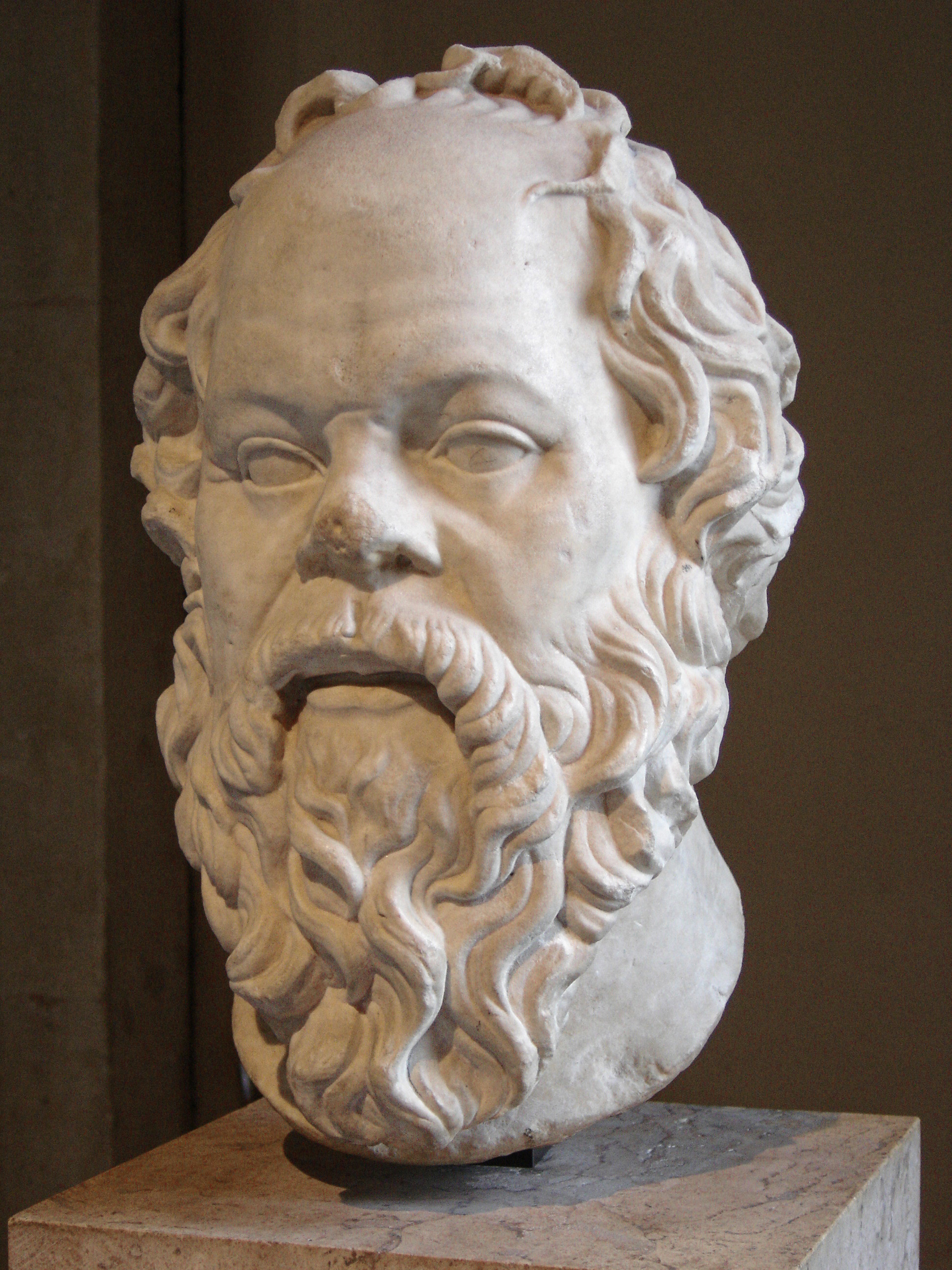
The type of reasoning we advocate is in the tradition attributed to the Greek philosopher Socrates. He considered himself the "gadfly" that God had attached to the state of Athens. In his view, God had chosen him to interrogate the "pretenders to wisdom". Socrates was adept at asking questions, questions truth" in the historical record. He believed that the search for the truth was of the highest importance. The oracle of Delphi proclaimed that there were none wiser than Socrates. The self-proclaimed "wisest men" of Athens were oblivious to their own sciolism. They were in fact ignorant, but thought they knew everything there was to know. Socrates was wiser than they, not because of what he knew, but because he was aware of his own lamentable ignorance.

Tuesday, January 03, 2012

Part 1 (c): Skeptical Thinking (How to Apply Humbug!) - Humbug! 2nd Edition

Most knowledge is provisional, and over the course of time, many "certainties" prove to be false or misleading. Decision makers (such as bureaucrats), keepers of the "Truth" (such as academics), people who paraphrase press releases (such as journalists), and people who comment on blog posts, often have an "axe to grind", or rather, a view of the world which they hope will prevail. When such people write or speak, they often dress up mere opinions as well founded, research based certainties. Be afraid. Be very afraid of dogmatism masquerading as superior insight (see special pleading). We all need to develop our capacity to identify and challenge humbug.

Our best protection against those who attempt to shape our society and culture through their tendentious bloviation or simple-minded sloganeering is healthy skepticism. Healthy skepticism needs to be underpinned by tools of analysis. Being able to identify humbug provides these tools. The "tools" are the informal fallacies in thinking named and described in the book. Once a reader is sensitised to a range of these fallacies, he or she is able to recognise them and is less vulnerable to... (we have to write it, there's no better word, please forgive if it causes offence)... bullshit. Such intellectual skills retain their utility over the long term, and enable new content to be tested, examined critically and placed on a firm foundation.

In his 1946 book History of Western Philosophy, the philosopher Bertrand Russell makes a clear distinction between scientific beliefs and "other ways of knowing": "It is not what the man of science believes that distinguishes him, but how and why he believes it. His beliefs are tentative, not dogmatic; they are based on evidence, not on authority or intuition."

We believe that Russell's view on what characterizes the epistemology of science can be applied as a general exhortation to the seeker after truth. That is, the proper concern of the seeker after truth - the skeptic - is the soundness or otherwise of the reasoning behind an assertion, rather than the assertion per se. Thus, to be skeptical requires us to:
  1. ask for evidence to support a claim before accepting it as reasonable 
  2. admit to being uncertain when evidence is lacking and
  3. reject a claim as unreasonable when the evidence does not support it.
The following commentary is intended to introduce the reader to some general principles behind sound reasoning that should help one to pick position 1, 2 or 3.

Two deceptively simple questions 
Whether engaged in a discussion, forum, debate, lecture, public talk, seminar, or tutorial – or in reading and writing, the seeker after truth should always keep the following deceptively simple questions in mind.
  1. What are you saying?
  2. Why do you believe that what you are saying is true? 
The first question – what are you saying - is about meaning. A common problem encountered when attempting to understand the reasoning behind an argument is the wording of the argument itself. In debates between antagonists, misunderstandings often lead to fruitless and unnecessary conflict. When proponents and opponents of a position are actually talking at cross-purposes, they are not addressing the same proposition. Similarly, when a reader misinterprets a writer's intention, there is no engagement with the substantive ideas in the article or book.

A necessary condition for a rational argument is therefore clarity of expression. If the proponent cannot put a clear argument, the argument does not merit serious consideration. In some cases, an argument is so badly put that the proponent may be engaging in deliberate obfuscation, or at least careless indifference (see Gibberish). Whether in a formal debate, an informal discussion, or in writing an essay, the question: "What are you saying?" (Or what am I saying?) forces the proponent to clarify an argument. Once the nature and terms of the proposition are clearly established, the second question can now be asked.

The second question – why do you believe what you are saying is true – is about justification. In response to this the proponent should now seek to justify his or her position. Justification is the essential difference between a mere opinion and a rational assertion. An opinion is a belief based on untested grounds, and the foundations of an opinion often do not stand up to careful scrutiny (that's even if they are articulated). While it is possible that a mere opinion could be true, the seeker after truth will remain skeptical so long as the opinion remains unfounded. In contrast to an opinion, a rational assertion is a view that is consistent with the known facts and based on reasoned and sound argument. In short, it is justified (and at the very least, the justifying argument should contain no obvious fallacies).

Logic and reason 
There are two kinds of reasoning processes by which we establish what we know – deductive and inductive. Deductive reasoning is a guarantee of truth, so long as the premises are true. By way of illustration, consider the following statements: "Socrates is a human" (premise) and "all humans are mortal" (premise). If we accept that these premises are true then we must agree that "Socrates is mortal" (conclusion). Deductive reasoning often leads to trivial truths of this sort.

By way of contrast, inductive reasoning leads to the generation of a general law or principle after numerous specific observations have been made. For example, it has been observed that every single time an object is dropped near the surface of the Earth, the object has fallen towards the centre of the Earth (the observation). By inductive reasoning, we conclude that all dropped objects will always fall towards the centre of the Earth (the principle). Given a large number of observations of X, and if all known instances of X lead to Y, then all (known and unknown) Xs will lead to Ys as well. In terms of "watertight" formal logic, inductive reasoning is difficult (some would argue impossible) to establish. After all, we cannot know that all objects will always fall to the centre of the earth unless we personally witness every occurrence of a falling object (and even then, how can we know with certainty?).

This essentially pragmatic book does not therefore concern itself with formal logic. Most beliefs are inductive. Believing the sun will rise tomorrow morning is inductive – but it is not, strictly speaking, logical. It is, however, rational. There is a clear difference between the concepts "logical" and "rational" even though these two words are often used interchangeably. Logical reasoning, in its strictest sense is valid because of the tautological nature of the statements considered. If you are introduced to a bachelor, it follows that he is an unmarried man. Asserting that red is not a colour is logically false, because by definition red is a colour. A rational explanation on the other hand, is one that is justified by a reasoned and plausible argument that is not logically false (self-contradictory).

Identifying unreason and making your case 
If an argument is not illogical (i.e., not internally inconsistent) it does not follow that it is rational. A rational argument should not contain any fallacies. Attacking the quality of reasoning underlying a fallacy is at times a commonsense task, given that many fallacies are obvious non-sequiturs (non sequitur is a Latin term which literally means "does not follow"). However a heightened sensitivity to fallacies can be cultivated and developed.

The short descriptions at the beginning of the book allow fallacies to be identified quickly. Once a fallacy is identified it needs to be isolated and nullified. This can be done by demonstrating the error or errors in reasoning. The fallacies which constitute the body of this book collectively provide a large number of "worked examples" for consideration by the reader. Once the reader has considered a significant number of these examples, he or she should be well equipped with an armoury of debunking techniques and skeptical strategies which can be built upon in the future.

How should you go about improving your humbug hunting skills? When you are ready to get serious about improving your hunting skills, you should find a piece of writing (say an article or blog post) which you suspect if rubbish. You should re-read it more carefully, with the Humbug! short descriptions in front of you. When you read a "dodgy" statement, see if you can find a name for it. (That is, does it appear to be one of the fallacies named and described in Humbug!?) Make preliminary notes at first, and then check your initial impressions about the nature of the fallacies you have spotted by reading the more extensive descriptions in the body of Humbug! (It is dangerous to rely on the brief descriptions only. They are necessarily brief and therefore somewhat ambiguous.)

Here is a grossly oversimplified example. Suppose an author (Bonehead, 2007) makes a statement like this: "There is only one reason a student ever comes late to class - a bad attitude".

You could critique this statement by writing: "That's just ****." While Bonehead's statement might in fact be *****, your criticism is disastrously weak. You might "beef up" your criticism by giving a reason for your view. For example, you could write: "This statement is  **** because Bonehead is a ****." Unfortunately, this is not much of an improvement on your original response (even if Bonehead is in fact a ****).

An effective critique of Bonehead's statement might be worded as follows:
Bonehead's statement is in error because he is employing the single cause fallacy. In particular, his claim that there is only one reason (my emphasis) is clearly far too extreme. In their book Humbug!, Clark and Clark (2012) describe the single cause fallacy in the following terms: 'Single cause fallacies occur when a person assumes that there is only one cause of a complex problem.' Bonehead fails to recognise that in reality, there are many possible reasons why a particular student may be late to class on a particular occasion.

Thursday, December 29, 2011

Part 1 (b): Style and treatment - Humbug! 2nd Edition

The writing style of Humbug! is not disinterested and scholarly, it is deliberately assertive, "over the top" and declamatory. We frequently resort to the use of irony, overstatement and over-simplification in order to emphasize salient features of the fallacy under consideration. For this reason we will no doubt cause offence to most readers at some point. So be it. (It should be noted, besides the real examples, none of the scenarios described or characters sketched or depicted in this book are based on actual persons or real institutions.) For each fallacy, there is a cartoon which relates directly or indirectly to that fallacy. The cartoon should not be regarded as part of the substantive commentary on the fallacy. It is provided as light relief, and it may also function as an aide memoire and serve to prompt recall of the specific flaw.

The goal of the critical thinker is not to "win" an argument at all costs, but to "seek the truth". In this book, the skeptic or critical thinker is described variously as a detached enquirer, a doubter, a reasonable person, a dedicated debunker. All these labels are appropriate in the specific context described. However the commonest alternate label for critical thinker or skeptic used throughout the book is "seeker after truth". This seemingly long-winded usage is quite deliberate. A person claiming to know the Truth about any issue invites endless and unresolved controversy when engaged in argument or debate. A seeker after truth on the other hand, is one who believes that reasoned enquiry can move a debate forward towards a better understanding of an issue. While Ultimate Truth on many issues may be unknowable, we can at least move forward from egregious ignorance and error by using skilled, dispassionate, disinterested reasoning.

In this book we use the generic descriptor "the advocate" to label the proponent who engages in fallacious reasoning. This descriptor is often qualified with an appropriate adjective which captures the type of fallacy put forward by the advocate. Thus we have deceitful advocates, deluded advocates, devious advocates, ignorant advocates, superficial advocates, arrogant advocates, pompous advocates, stupid advocates and so on. Note that according to us, we should not use such terms to denigrate individuals (see Ad Hominem). However we decided to use these abusive terms anyway in order to demonstrate that we are at times capable of breathtaking hypocrisy.

Podcast related to this section: http://huntinghumbug101.blogspot.com/2011/12/very-first-episode-of-hunting-humbug.html

Friday, December 23, 2011

Part 1 (a): Purpose and usage - Humbug! 2nd Edition

The short title of this book is Humbug! Humbug" may be defined as "deceptive or false talk or behaviour" (OED). Our general aim in writing this book was to create a tool for the detection of humbug. Humbug! is intended to serve two main purposes. 1) A "ready reference" which may be consulted as required during discussions, forums, debates, lectures, public talks, seminars and tutorials, whether such events are part of a formal program of study, or open to the broader community. 2) A guide to be consulted as part of the reading and writing process – particularly by students as they research and write seminar papers or essays for assessment purposes.

Humbug! is more intended as a tool to be consulted as the occasion demands, rather than a book to be read in a linear fashion, from beginning to end. Users may find it to be a useful resource for those occasions when they read or hear a suspect statement or claim, and they want to identify the flawed reasoning in the assertion – and perhaps respond to the claim with informed skepticism. There are other such texts available to the reader that aim to do this too. As Hamblin states: "Most modern writers have their minor preferences of arrangement (of fallacies), but it is almost always the same material that is being chopped about and served up reheated." (Hamblin, 1970: 49). Our approach in chopping up and reheating fallacies is focused on pragmatism and ease of use.

The subtitle of the book is the skeptic's guide field guide to spotting deliberate deceptions and false arguments. (Skeptic: "A person inclined to question or doubt accepted opinions." – OED.) The skeptical enquirer, whether a student, an academic or a member of the public is a person who has the habit of questioning assertions made by others. Skepticism is a desirable trait in any person in any walk of life and it is an essential foundation of scholarship. However skepticism is sometimes confused with cynicism, and it is important to preserve the distinction. A person who is cynical is one who believes that people are motivated purely by self-interest. The outlook of a cynic is often contemptuous and mocking. The outlook of a skeptic is by contrast positive and productive. He or she assumes nothing about motives and is focussed on deeper understanding of issues - and on real solutions to real problems.

This second edition of Humbug! has been expanded and includes sections on Skeptical Thinking Tools and Bad Faith. Skeptical Thinking Tools is a small section that provides a brief overview of some simple techniques and rules of thumb we have found useful in the analysis of arguments and in forming one's own position. Bad Faith is based on an article Jef wrote for the Australian Skeptic journal. It outlines the use of critical thinking skills in bad faith.

The core of the second edition, as with the first, does not concern itself with the structure of good arguments, or with models for enquiry. Rather, the content focuses on error. The underlying premise is that if individuals become astute at identifying and critiquing flawed arguments, they will become more skilled at identifying sound arguments presented by others and in formulating sound arguments of their own. When students, journalists, writers and participants in discussions and debates know what not to do in presenting an argument, they will develop a more sound perception of what they should do.

From our perspective, the elimination of flawed reasoning is the most important foundation of a sound argument. This book is therefore analogous to a scalpel. A surgeon uses a scalpel to remove diseased tissue – the skeptical enquirer can use this book to remove diseased arguments. A biologist uses a scalpel to remove extraneous tissue from a specimen in order to expose the essential structure of the specimen to scrutiny. In the same way Humbug! may be used to identify and remove poor reasoning from the reader's own arguments, and to allow the reader to examine and expose poor reasoning in the arguments of others.

Part 2: Deliberate deceptions and false arguments - is an expansion on the first edition. There are forty-eight specific deceptions and false arguments named and described. It should not be assumed by the reader that our list is exhaustive, or that there is a general consensus on the number and nomenclature of the types of deceptions and false arguments in the "body of literature" on fallacies in thinking, critical thinking and informal logic. These were selected because they are commonly encountered in published writings on contentious issues, topics of interest to skeptics and in student writing for assessment purposes. The expansion covers fallacies we have found further examples of since the first edition, including some "new" fallacies of our own coinage.

We use the terms fallacy, flaw, humbug and deception interchangeably. Technically a fallacy is an “argument gone wrong”. A logical fallacy is very specific – it is a deductive argument that is in an invalid form. An informal fallacy covers all the “wrong arguments” that may have a valid deductive form, but are based on erroneous premises.  Humbug covers all this but includes deliberate deceptions, such Moving the Goalposts and Stacking the Deck.

Each fallacy has a primary label (the heading). Other terms and/or related concepts are listed below the heading. The primary labels given were chosen over other possible labels for clarity of meaning. We have opted for vivid and memorable terms over less emphatic alternatives. Some of the primary labels and other terms/related concepts are very widespread and would be encountered in almost any book on critical thinking or informal reasoning. Some of the fallacies described will not be encountered in any other books as the fallacy and its label are our own coinage (e.g.Argument by Artifice, Burden of Solution, Sanctimony, Simple-Minded Certitude and WTF? Fallacy).

We decided not to organise our treatment of fallacies in thinking around a taxonomy of fallacies - as is often the case in other books and websites on fallacies (and as has been requested of us by some readers). We simply list fallacies in alphabetical order by name. Our justification at the time the decision was made was in part a function of the blurry edges between fallacies (e.g. Stacking the Deck and Observational Selection may be difficult to distinguish at times) and the fact that that there is as yet little consensus in the literature on the names of fallacies and taxonomic groupings. While there is no agreed-upon standard set of fallacies, the naming and describing of fallacies is a necessary step in the development of humbug-hunting skills.

For this edition, we gave the idea of classifying fallacies serious and scholarly consideration. For example, Hamblin states:
A fallacious argument, as almost every account from Aristotle onwards tells you, is one that seems to be valid but is not so... Of those who invent their own classifications... their most noteworthy characteristic is that they disagree not only with the Aristotelians but also extensively with one another, and have quite failed to establish any account for longer than the time it takes a book to go out of print... Despite divergences of arrangement, there is considerable overlap in raw material as between one writer and another: the individual kinds of fallacy are much the same, even down to their names. (1970: 12, 13)
As such, we decided our original decision should stand. (For a taxonomic treatment of fallacies see, for example, Gary N. Curtis site: (http://www.fallacyfiles.org/taxonomy.html)

Podcast related to this section: http://huntinghumbug101.blogspot.com/2011/12/very-first-episode-of-hunting-humbug.html